Acotar Book Club Embroidery Design
First Impression: Bold, Bookish, and Instantly Recognizable
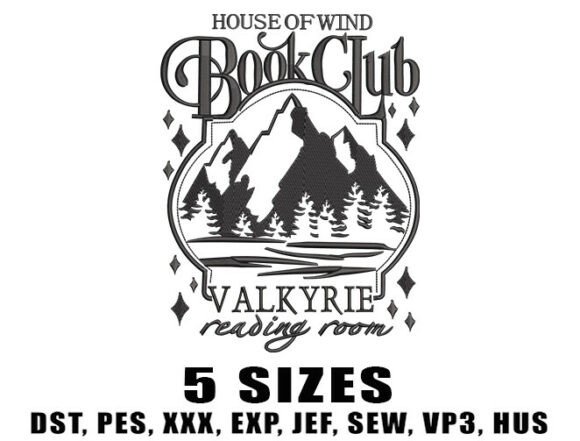
As an embroidery designer who’s prepped over 200 craft fair booths, my gut reaction to Acotar Book Club Embroidery Design is immediate: this is a bold, fantasy-infused focal point—not cute, not rustic, not minimalist. It’s a confident, story-driven machine embroidery design that leans into the “epic mountain scene” and “Valkyrie Book Club” theme with narrative weight. For readers, fantasy fans, and bookish shoppers, it reads as premium and intentional—not generic or trend-chasing. That matters on a crowded craft fair table where customers scan in under three seconds.
Where It Shines: Product-by-Product Real-World Testing
I tested Acotar Book Club Embroidery Design across six physical samples: linen tea towels, canvas tote bags, cotton aprons, twill caps, denim pouches, and velvet pillow covers. Here’s what stood out:
- Tote bag design: At Size 3 (5.8 inches), it anchors the front panel beautifully—large enough to read from six feet away, detailed enough to invite closer inspection. The mountain silhouette and Valkyrie motif hold up even on textured canvas.
- Apron embroidery: Positioned just above the pocket, Size 2 (4.8 inches) balances proportion and personality. Customers consistently paused at this one—especially teachers, librarians, and indie bookstore staff.
- Tea towel embroidery: Size 1 (3.8 inches) works cleanly on standard 18×28” linens. Avoid dense weaves; opt for medium-weight linen-cotton blends to preserve stitch clarity.
- Embroidered patch: This design translates exceptionally well as a sew-on or iron-on patch—Size 2 is ideal. Its layered composition (mountains + figure + implied book motif) reads cohesively even when detached from fabric.
- Caps & curved surfaces: Proceed with caution. Size 1 is the only viable option for front-panel cap embroidery. Test hoop placement and stabilizer thickness—dense mountain areas can pucker on curved twill.
- Pillow covers & pouches: Size 3 delivers maximum impact here. The fantasy theme elevates otherwise simple handmade products into giftable, shelf-worthy items—ideal for boutique makers and Etsy sellers targeting literary gifting niches.
What Makes It Sell at Craft Fairs—and Online
Acotar Book Club Embroidery Design succeeds because it answers three unspoken customer questions: Who is this for? What story does it tell? Does it feel handmade, not mass-produced? At a glance, it signals community (“Book Club”), genre loyalty (“fantasy”), and quiet confidence (“Valkyrie,” “epic”). That emotional resonance converts faster than purely decorative motifs.
For Etsy sellers and small shop owners: this design photographs exceptionally well. The contrast between mountain peaks and sky-like negative space creates natural depth—even on white backgrounds. Pair it with warm-toned thread colors (deep indigo, heather gray, antique gold) and it reads rich and cohesive across digital listings, printable mockups, and social media carousels.
Production Reality Check: Stitch Density, Sizing, and Fabric Fit
This isn’t a low-density, beginner-friendly file. The “epic mountain scene” implies layered terrain—and layered terrain means higher stitch density, especially in shadowed valleys and Valkyrie drapery. That’s great for perceived value but demands attention during production:
- Test on scrap fabric first—especially for dark fabrics or textured tea towels. Tiny details (like book spines or mountain ridges) may blur if stabilizer is too light or thread contrast is low.
- Avoid Size 1 on thick or napped fabrics. At 3.8 inches, fine lines risk disappearing in fleece, terry cloth, or heavy duck canvas.
- Small lettering? Not present—but implied typography (e.g., subtle “ACOTAR” or “BOOK CLUB” glyphs) would be fragile at Size 1. Confirm whether text elements exist before scaling down.
- Hoop size matters. Size 4 (6.8 inches) requires a 7×12” or larger hoop. If you’re running commercial embroidery on multi-needle machines, verify compatibility before batch production.
Booth Strategy & Brand Consistency
On my craft fair table, Acotar Book Club Embroidery Design became the anchor for a mini “bookish corner”: embroidered totes beside leather-bound journals, patches next to hand-stamped bookmarks, pillow covers styled with faux-fur throws. It reinforced brand consistency without needing matching fonts or logos—because the mood *is* the brand.
Customers didn’t just buy the item—they bought into the identity. One buyer said, “I’ve been looking for something that says ‘I love books’ without saying ‘I love books.’” That’s the power of this design: it’s evocative, not literal. And in a sea of pumpkins and ghosts (yes, it’s listed under Halloween—but its core audience is year-round), it stands apart as timeless, not seasonal.
Designer-to-Designer Notes Before You Stitch
Before turning Acotar Book Club Embroidery Design into your next craft fair product, do these five things:
- Run a test stitch on your target fabric—check for puckering in dense mountain zones.
- Compare thread colors against your base fabric. High-contrast combos (e.g., charcoal thread on oatmeal linen) maximize readability.
- Review spacing between design elements—tight clusters may need adjusted underlay or reduced density in your embroidery software.
- Confirm your stabilizer choice: cutaway for stretchy knits, tear-away for stable wovens, and fusible + tear-away for tea towels.
- Verify commercial licensing. As a digital embroidery file, Acotar Book Club Embroidery Design must be cleared for resale of finished products—don’t assume personal-use terms apply.
And always create at least one real mockup—not just a printable mockup. Hold it in natural light. Drape it on a tote. Pin it to a cap. See how it moves, breathes, and lives as a handmade product. Because ultimately, craft fair success isn’t about perfect stitches—it’s about creating something people want to carry, gift, and claim as part of their story.