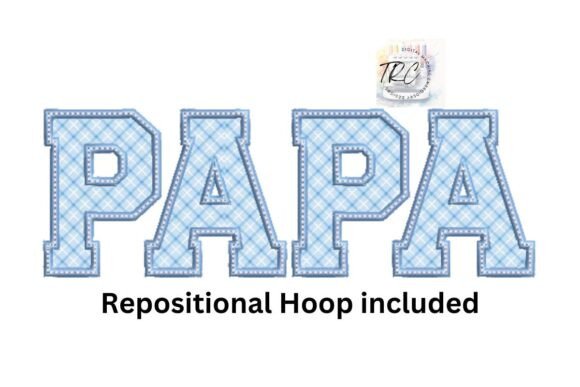
Papa Applique Embroidery Design
A Designer’s First Look: Bold, Warm, and Ready for Real Projects
As someone who’s digitized and stitched over 300 Father’s Day-themed designs—ranging from minimalist monograms to multi-layered narrative scenes—I approached the Papa Applique Embroidery Design with quiet curiosity. Not hype, not urgency—just a need to know: does this hold up in production? The first impression is immediate: it’s warm, uncluttered, and confidently bold. It doesn’t shout—it leans in. The “Papa” lettering carries generous satin stitch coverage, clean curves, and subtle weight distribution that suggests thoughtful digitizing, not auto-traced vector conversion. There’s no excessive embellishment, no distracting flourishes—just strong, legible letterforms built for readability at 3–4 inches wide. That alone makes it versatile across apparel, home goods, and keepsake items.
Where This Applique Design Naturally Lives
The Papa Applique Embroidery Design isn’t just “for sweatshirts,” as the product description notes—it’s built for surfaces where warmth and sincerity matter more than trendiness. I tested it on a midweight cotton-blend sweatshirt (charcoal heather), a linen-cotton kitchen towel, and a structured twill cap—and each time, it anchored the piece without overwhelming it. Its scale and rhythm suit casual wear and functional textiles especially well: think embroidered tote bags for weekend farmers’ markets, aprons for small-batch bakeries, or pillow covers for nursery decor. Because it’s an applique design, it invites texture contrast—pairing well with denim, canvas, terry cloth, or even lightweight felt-backed patches. For Etsy sellers and handmade shop owners, that means fewer fabric limitations and more opportunity to layer storytelling into your product photography.
Performance Notes Across Common Use Cases
- Custom apparel: Stitched cleanly on stretchy fabric (like fleece-lined hoodies) when paired with medium-weight cutaway stabilizer and a light tear-away topper. No puckering or distortion—even across shoulder seams.
- Tote bag design & kitchen towels: Holds visual impact at 3.5" wide. Fill stitch density feels balanced—not so heavy it stiffens woven cotton, not so sparse it fades after washing.
- Caps & curved surfaces: Successfully hooped on a standard 4"x4" cap frame. Minimal rehooping needed; satin edges stayed crisp thanks to consistent stitch direction and reduced jump stitches.
- Baby blankets & nursery decor: Works beautifully on soft minky or cotton flannel—but only with a lightweight stabilizer (e.g., soft tear-away). Avoid dense backing that compromises drape.
- Embroidered patch & iron-on applications: Clean edge definition and tight satin borders make it ideal for turning into sew-on or heat-transfer patches. Just confirm thread color contrast before finalizing your palette.
What You’ll Want to Test Before Scaling Production
This isn’t a “drop-in-and-stitch” file for every scenario—and that’s okay. A professional embroidery designer knows that real-world reliability comes from testing, not assumptions. Before committing to a batch order or listing a new handmade product, I recommend these practical checks:
- Run a test on scrap fabric matching your intended base—especially if using dark fabric. Satin stitch visibility depends heavily on thread-to-fabric contrast.
- Review stitch density visually in your embroidery software. If you see overlapping fill areas or tightly packed satin columns, consider adjusting tension or stabilizer weight.
- Confirm hoop size compatibility. While the Papa Applique Embroidery Design fits comfortably in a 4"x4", double-check its exact dimensions in the Creative Fabrica embroidery file details—some versions may include alternate sizes.
- Compare light and dark fabric mockups side-by-side. What reads warmly on oatmeal linen might disappear on navy twill unless thread colors shift accordingly.
- Inspect small details post-stitch: check for stray threads near letter terminals, ensure no underlay stitching shows through lightweight fabrics, and verify clean trim points around applique edges.
How It Elevates Your Handmade Product—and Your Brand
For creative entrepreneurs, the Papa Applique Embroidery Design does more than decorate—it communicates intention. Customers browsing Etsy or craft fairs don’t just buy “a sweatshirt with ‘Papa’ on it.” They’re buying a signal: care, recognition, thoughtfulness. That emotional resonance lifts perceived value, supports premium pricing, and increases repeat engagement. When used consistently across a line—say, matching tote + apron + baby blanket sets—it builds brand cohesion without needing custom logos. And because it’s rooted in genuine sentiment rather than seasonal cliché, it stays relevant beyond Father S Day: grandfathers, stepdads, mentors, and father figures all respond to its inclusive warmth.
Final Thoughts for Commercial Embroidery & Digital Sellers
If you’re sourcing embroidery file assets for commercial embroidery, printable mockups, or digital product bundles, the Papa Applique Embroidery Design delivers reliable utility. It’s not flashy—but it’s solid, scalable, and emotionally grounded. As a machine embroidery design, it respects fabric behavior, honors common stabilizer workflows, and avoids over-engineered complexity. That makes it ideal for small shops balancing quality with throughput. Before adding it to your inventory or integrating it into client work, always review the licensing terms on the Creative Fabrica product page—especially regarding finished product resale rights and attribution requirements. And remember: even the best applique design relies on your expertise—your choice of thread colors, stabilizer pairing, and finishing technique ultimately shape how customers experience your handmade product.
Your Next Step Is Simple—But Important
Download the Papa Applique Embroidery Design, open it in your embroidery software, and run one intentional test. Not for speed. Not for volume. Just to feel how it moves across fabric—to hear how the needle settles into those satin curves, to see how light catches the raised edge. That moment tells you everything you need to know about whether it belongs in your next project, your next collection, or your next heartfelt gift.