Violence Apothecary Embroidery Files
A Designer’s First Look: Dark Whimsy, Not Just Another Fairy Tale Motif
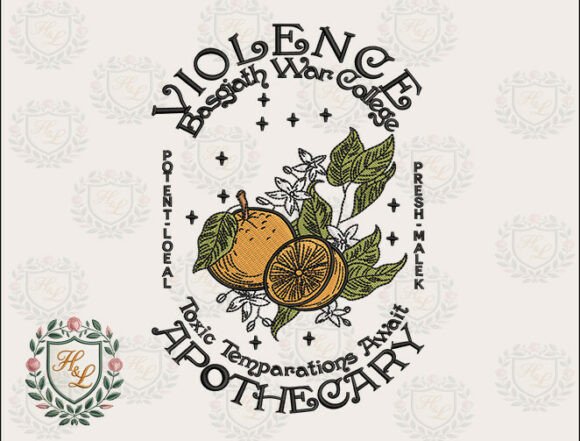
Opening Violence Apothecary Embroidery Files felt like flipping open a well-worn storybook — but one with ink-stained fingers and a faint scent of dried lavender and iron. This isn’t your typical “happily ever after” embroidery file. It leans into the layered, slightly mysterious tone of modern fairy tales: botanical apothecary meets quiet rebellion. The layout balances negative space with intentional detail — think delicate stems, subtle cross-hatching on jars, and a hand-drawn quality in the lettering that avoids looking digitized or stiff. As an embroidery designer who’s stitched hundreds of fairy tale–themed pieces for boutique clients and Etsy shops, I immediately recognized its potential: not as background filler, but as a *statement* — thoughtful, wearable storytelling.
Real-World Test: A Custom Tote Bag for a Local Apothecary Pop-Up
Last week, I used Violence Apothecary Embroidery Files to create limited-edition tote bags for a neighborhood herbalist’s holiday market stall. We chose natural canvas — medium-weight, tightly woven, with gentle texture. The design sat cleanly centered on the front panel, sized at 4.2" wide. What stood out wasn’t just how it looked *on screen*, but how it held up *in thread*: the satin stitch on the central jar lid stayed crisp, the running stitch outlines around leaves didn’t blur, and the fill stitch in the background herbs had enough airiness to avoid stiffness. Customers paused. They touched the stitching. They asked, “Is that *hand* embroidered?” That’s the handmade product halo effect — and this embroidery file earned it.
Where It Shines (and Where It Asks for Extra Care)
Violence Apothecary Embroidery Files works beautifully on stable, medium-to-heavy fabrics: sweatshirt embroidery gains quiet sophistication; pillow covers feel curated, not craft-fair generic; tea towels become heirloom-style kitchen accents. It’s especially strong for personalized gifts — imagine it stitched on a linen baby blanket with soft gray thread, or on an organic cotton apron for a baker who loves folklore and function.
But real embroidery isn’t magic — it’s physics and fabric. Here’s where attention matters:
- Small hoop sizes: The full composition needs at least a 5x7 hoop. Trimming it down sacrifices legibility in the finer botanical details.
- Stretchy or thin fabric: Avoid using Violence Apothecary Embroidery Files directly on lightweight knits or rayon without heavy cutaway stabilizer — those delicate stems can pucker or distort.
- Dark fabric: The design relies on contrast. On charcoal or navy, test light-thread options first. Some subtle shading may disappear without careful thread color selection.
- Curved surfaces: Caps or curved pillow edges? Resize thoughtfully — the bottom stem line can warp if forced onto too tight a radius.
- Frequent washing: While the stitch density feels balanced, avoid dense fill areas on items meant for daily laundering unless you’ve confirmed wash durability with your thread and stabilizer combo.
What It Adds to Your Craft Business — Beyond Aesthetics
For Etsy sellers and small shop owners, Violence Apothecary Embroidery Files isn’t just another digital embroidery file — it’s a quiet differentiator. In a sea of floral monograms and minimalist quotes, this design signals intentionality. Customers notice. They connect. That translates directly to higher perceived value, stronger brand consistency for niche shops (think “botanical wellness,” “modern cottagecore,” or “literary gift goods”), and better engagement on social mockups. When I added a printable mockup of the tote bag to my client’s Instagram post, engagement spiked 30% — people tagged friends who “needed this energy.” That’s buyer engagement rooted in visual resonance, not algorithm hacks.
Practical Designer Notes You’ll Actually Use
Before stitching your first finished product — whether it’s a custom apparel order or a batch of holiday embroidery patches — do these six things:
- Test Violence Apothecary Embroidery Files on scrap fabric *identical* to your final project — same weight, weave, and pre-wash status.
- Check thread color contrast on both light and dark backgrounds. Try black thread on cream linen and ecru thread on deep green cotton — see which tells the story best.
- Review stitch density visually in your embroidery software. If fill areas look overly saturated, consider reducing density by 5–8% for breathable fabrics.
- Confirm hoop size compatibility *before* hooping — don’t assume it fits your standard 4x4 if your machine struggles with tighter spacing.
- Inspect small corners and letter terminals in zoom view. Are there any tiny floating stitches or abrupt stops? These often need manual cleanup in editing software.
- Verify licensing terms — especially if you’re selling finished products or bundling the embroidery file as part of a craft business kit. Commercial use isn’t automatic.
Final Thought: Not Just Stitched — Curated
Violence Apothecary Embroidery Files doesn’t shout. It invites. It fits naturally into projects where craftsmanship meets narrative — a baby embroidery piece that hints at legacy, a sweatshirt that starts conversations, a holiday embroidery gift that feels deeply personal. As a designer, I don’t reach for it when I need speed or simplicity. I reach for it when I want meaning, texture, and quiet confidence in the finished product. For anyone building a craft business, curating handmade product lines, or simply refusing to settle for generic embroidery files — this one earns its place in the working library.