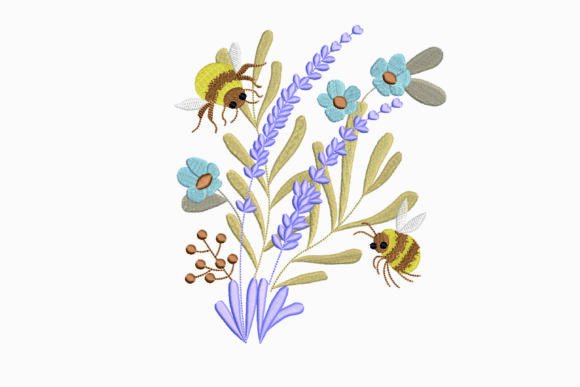
Lavender Embroidery Design
A Practical Review for Small Business Merch and Branded Patches
As an embroidery designer who’s digitized and stitched thousands of commercial projects—from café aprons to boutique tote bags—I approached the Lavender Embroidery Design with both curiosity and scrutiny. The title alone signals intention: “elegant,” “buzzing bees,” “nature lovers,” and “farmhouse-style” aren’t just decorative cues—they’re brand signals. For small business owners, Etsy sellers, and local creatives building visual consistency across merchandise, this isn’t just another floral motif. It’s a potential cornerstone of their brand identity.
First Impression: Elegant, Approachable, and Intentionally Rustic
The Lavender Embroidery Design lands as softly confident—not overly ornate, not minimal to the point of sterility. Its placement in the Outline Flowers category suggests clean line work over heavy fill, which is excellent news for versatility. The inclusion of buzzing bees adds subtle movement and personality without clutter—ideal for businesses that want warmth and authenticity (think: a florist’s staff cap, a pet brand’s embroidered bandana, or a bakery’s linen apron). It reads as handmade but polished—exactly the balance small businesses need to convey care without sacrificing professionalism.
Real-World Performance Across Merch Channels
In practice, the Lavender Embroidery Design shines where many floral machine embroidery designs falter: adaptability. As an embroidered patch, it holds structure beautifully at 2.5"–3.5" widths—ideal for sew-on branding on denim jackets, tote bags, or product packaging accents. On staff uniforms, it works cleanly as a chest logo or sleeve detail, especially when paired with muted thread colors (sage green, soft lavender, warm charcoal) that complement natural-fiber fabrics like cotton canvas or linen-blend aprons.
For cap embroidery, its outline-based construction avoids the puffiness or distortion common with dense fill flowers—making it reliable even on curved front panels. As a tote bag design, it scales gracefully from 3" to 5", retaining legibility and charm without overwhelming the canvas. And for custom apparel like work shirts or boutique tees, it functions equally well as a singular focal point or part of a coordinated set—say, paired with a simple bee icon or minimalist script tagline.
Because it’s rooted in nature themes and farmhouse aesthetics, it also resonates strongly with seasonal campaigns: spring farmer’s market merch, summer garden party swag, or holiday gift sets for botanical brands. That emotional resonance directly supports customer engagement and buyer trust—people don’t just buy a logo; they invest in a feeling, and this design delivers that quietly, consistently.
Where to Use It Thoughtfully—Not Everywhere
While versatile, the Lavender Embroidery Design isn’t universally frictionless. Its delicate outlines and fine bee details demand attention at smaller sizes. Below 1.75", stitch definition blurs—so avoid it for tiny collar accents or micro-patches on keychains unless you’ve confirmed its performance at that scale. Similarly, on highly textured fabric (like bouclé or thick terry cloth), consider simplifying or requesting a low-density version—high stitch density can cause puckering or poor registration.
Dark uniforms require careful thread color planning: white or ecru may lack contrast, while bright lavender risks looking artificial. Test against your actual garment fabric—not just on screen. And always verify hoop size compatibility before digitizing for production; some versions of this machine embroidery design may include multiple formats with varying dimensions.
How It Strengthens Brand Identity and Product Value
Consistency is currency for small businesses. When your apron embroidery, cap embroidery, and tote bag design all share the same botanical language—the same rhythm of stems, same proportion of bloom to bee—you build instant recognition. Customers begin to associate that elegance with your shop, studio, or service. That’s how a handmade product gains perceived value: through cohesive, intentional execution.
More than aesthetics, this design supports storytelling. A lavender-and-bee motif subtly communicates sustainability, pollination, care for local ecosystems—values that resonate deeply with today’s conscious buyers. Used across customer gifts, event merch, or even printed labels on jars or boxes, it becomes part of your narrative architecture.
Essential Embroidery Designer Notes Before Production
- Test in black and white first—to assess contrast, spacing, and silhouette clarity without color distraction.
- Check small patch viability—stitch out a 2" version on your target fabric before bulk ordering.
- Review thread color contrast on both light and dark substrates—especially for uniforms and retail packaging.
- Inspect spacing between elements—bees should remain distinct from lavender sprigs at reduced sizes.
- Confirm hoop size requirements—some versions may need larger hoops, affecting cap or cuff placement options.
- Test on real fabric with proper stabilizer—a lightweight tear-away works for totes; cut-away is safer for stretchy knits or frequent-wash items.
- Create a printable mockup for client approval—show it scaled on actual product photos, not just blank templates.
- Compare beside other design assets—does it harmonize with your current logo, typography, or secondary icons?
- Verify commercial licensing before using in client projects or reselling as part of branded merchandise—this is non-negotiable for any digital embroidery file used in commercial embroidery.
The Lavender Embroidery Design isn’t just pretty—it’s purpose-built for small business growth. Whether you’re launching your first line of small business merch, refreshing staff uniforms, or elevating your Etsy shop’s unboxing experience, it offers quiet sophistication with real-world flexibility. Just remember: great embroidery starts with thoughtful testing—not just beautiful files. Let this design earn its place in your design assets, not just your cart.