Mama’s Little Bestie, Baby Embroidery
First Impression: Soft, Sweet, and Instantly Relatable
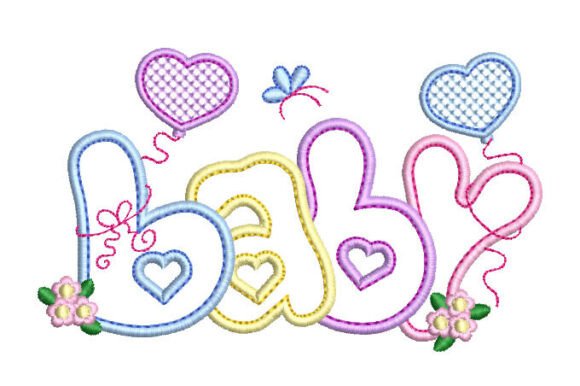
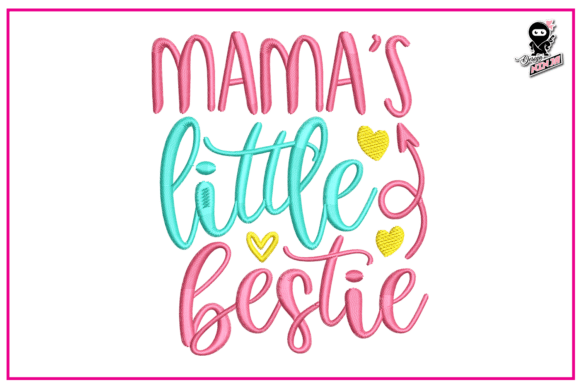
As an embroidery designer who’s curated over 200 craft fair booths and styled countless Etsy listings, my gut reaction to Mama’s Little Bestie, Baby Embroidery is immediate: this is a warm, emotionally resonant design—not flashy, but deeply human. It lands squarely in the “soft modern” category—neither overly rustic nor ultra-minimal, with gentle curves, balanced proportions, and a quiet confidence. The title alone tells a story before the eye even lands on the stitchwork. That’s gold for handmade markets, where shoppers pause for less than three seconds per item.
Where It Shines: Craft Fair & Boutique Product Pairings
Tote bags: A standout. When stitched on natural canvas or oatmeal linen, Mama’s Little Bestie, Baby Embroidery reads clearly from six feet away—especially when placed slightly off-center on the front panel. It adds tenderness without overwhelming the bag’s utility.
Aprons and tea towel embroidery: Perfect scale for the upper corner or chest pocket area. On a striped cotton apron or waffle-weave kitchen towel, it becomes a quiet signature—a detail that signals care, not clutter. Customers consistently linger longer on aprons with baby-themed embroidery; it sparks conversation and emotional connection at the booth.
Embroidered patches and fabric pouches: This design translates beautifully as a sew-on or iron-on patch. Its clean outline and moderate stitch density hold up well when cut and finished. On a drawstring pouch or mini diaper clutch, it elevates a simple item into a giftable handmade product.
Pillow covers and market bags: At 4–5 inches wide, Mama’s Little Bestie, Baby Embroidery anchors a 16x16 pillow cover without competing with texture or pattern. On a lightweight canvas market bag, it balances nicely against hand-stamped lettering or botanical prints.
Caps and curved surfaces: Use caution here. The design includes subtle facial features and small text elements (“Mama’s Little Bestie”) that may distort on structured caps unless digitized specifically for curved application. For craft fairs, I recommend reserving it for flat or gently rounded items only—unless you’ve tested it on scrap cap fabric first.
What Makes It Sell—And What Requires Attention
This machine embroidery design works because it’s instantly legible, emotionally specific, and commercially versatile. Shoppers don’t need to decode symbolism—they recognize love, bonding, and new motherhood in under two seconds. That clarity makes it ideal for booth samples, printable mockups, and fast-scrolling Etsy listings.
But practicality matters just as much. Mama’s Little Bestie, Baby Embroidery performs best at medium sizes (3.5–5.5 inches). Shrinking it below 2.75 inches risks losing definition in the facial details and script lettering. Likewise, enlarging beyond 6 inches may expose thin connecting stitches or uneven fill transitions—especially if the original embroidery file wasn’t optimized for scalability.
Stitch density is likely moderate—not sparse, not heavy—but always verify. Dense areas (like hair or layered clothing outlines) can cause puckering on textured towels or thick quilting cotton unless paired with appropriate stabilizer. And on dark fabric? Test thread contrast rigorously. Pale pinks or creams may disappear on navy or charcoal unless you switch to ecru, heather gray, or soft gold thread.
Booth & Brand Impact: More Than Just Cuteness
In a sea of generic “Baby Boy” or “Little One” designs, Mama’s Little Bestie, Baby Embroidery stands out by centering relationship—not role. That nuance lifts perceived value. Customers pay more for items that feel personal, intentional, and emotionally intelligent—and this design delivers that quietly.
For your booth display, pair it with cohesive design assets: a matching tea towel + pouch + onesie set, all using the same thread palette. Consistency builds trust. And when photographed for Etsy or Instagram, it renders beautifully—soft shadows, balanced negative space, and clear focal points make it highly scroll-stopping.
It also scales well across product types. You can use the same embroidery file to create a $28 tote, a $14 patch, and a $42 pillow cover—maximizing ROI on your digital embroidery file investment. That repeatability is essential for small shop product lines and batch production.
Designer Notes You Can’t Skip
- Always test on scrap fabric—especially with textured towels, terry cloth, or structured caps. Fabric texture changes how stitches lay and read.
- Check thread contrast early. Print a color swatch sheet and stitch a 2-inch sample on your top three fabric choices.
- Review spacing and proportions in your embroidery software. Does the “Bestie” curve flow naturally? Are letters evenly spaced? Small inconsistencies magnify at retail scale.
- Confirm hoop size compatibility. If your most-used hoop is 4x4, ensure key versions of the design fit comfortably within that boundary—or plan for re-hooping.
- Inspect stitch density visually. Zoom in: are there long satin runs that might snag? Are tiny eyes or noses built with secure fill or risky isolated stitches?
- Use the right stabilizer. Light tear-away for stable cottons; cut-away for knits or stretchy baby rib; fusible + tear-away combo for towels.
- Create at least one real mockup—not just a digital preview. How does it drape? How does light hit the thread? Does it feel premium in hand?
- Compare fabric colors side-by-side. A cream thread reads differently on oatmeal linen vs. white poplin. Your customer sees the finished product—not your screen.
- Confirm commercial licensing before selling finished products. As an Etsy seller or boutique maker, you need explicit rights to use this machine embroidery design in resale items.
Final Thought: A Quiet Anchor in a Busy Market
Mama’s Little Bestie, Baby Embroidery won’t shout—but it will be remembered. In a craft fair environment full of bold typography and saturated palettes, its sincerity and soft precision become strengths. It invites touch, encourages storytelling, and supports repeat purchases: moms buy it for themselves, friends buy it as baby shower gifts, and grandparents snap it up for keepsake blankets. For Babies-focused makers and Embroidery professionals alike, it’s not just another design—it’s a reliable, emotionally grounded asset in your creative toolkit.