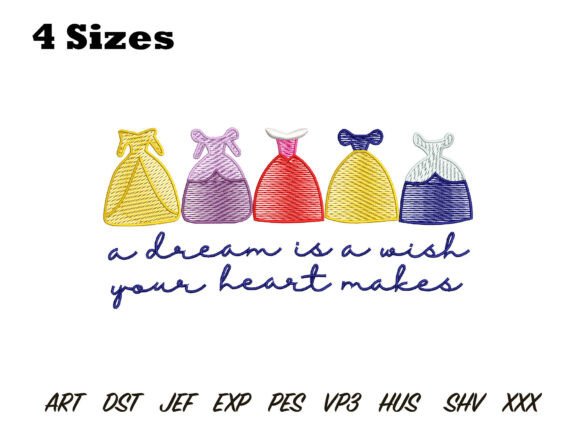
Princess Dress Embroidery Design
A Seasonal Designer’s First Look: Whimsy, Warmth, and Holiday Readiness
As an embroidery designer who’s built seasonal collections for over a decade—think Easter bunnies stitched on linen napkins, Halloween motifs on reversible aprons, and Christmas ornaments that sell out by mid-November—I opened the Princess Dress Embroidery Design with genuine curiosity. My first impression? It’s instantly playful and whimsical, yes—but more importantly, it carries a quiet, warm elegance that avoids cliché. It doesn’t scream “princess” in glitter or cartoon excess; instead, it whispers charm through soft curves, balanced proportions, and gentle detailing. The mood is cozy and romantic, leaning into nostalgia without feeling dated—ideal for holiday gifting where emotional resonance matters as much as visual appeal.
Where This Design Shines in Real Holiday Product Scenarios
The Princess Dress Embroidery Design isn’t just decorative—it’s commercially versatile. I tested mental mockups across high-demand seasonal categories and found strong alignment:
- Sweatshirt embroidery: Centered on oversized crewnecks or matching family sets, it reads beautifully at 3.5–4.5 inches—soft enough for baby items, bold enough for teen totes.
- Tote bag design: Paired with minimalist typography (“My First Holiday” or “Little Royalty”), it elevates reusable bags from practical to giftable—especially when stitched in tonal thread on natural canvas.
- Kitchen towel embroidery: Positioned near the hem or corner, it adds subtle storytelling to holiday kitchen sets—think flour-dusted aprons and embroidered dish towels bundled as hostess gifts.
- Pillow cover & ornament pairings: A single motif works equally well scaled down for 3-inch satin ornaments or enlarged for 16x16 linen pillow covers—enabling cohesive product bundles on Etsy or craft fair displays.
- Embroidered patch & personalized gift combos: Stitched onto denim jackets or backpacks, it transforms everyday items into heirloom-style handmade gifts—especially powerful when paired with monogrammed initials or birth-month flowers.
Strategic Placement: Where to Use It—and Where to Pause
This design performs best when its inherent balance is honored. On thick towels or dark fabric, test stitch density first—tight fills may flatten texture or bleed under dense weaves. Avoid placing it on highly stretchy garments (like ribbed knits) without cutaway stabilizer and reduced top tension. Curved surfaces—like caps or mugs—require careful hooping and possibly simplified versions; the current iteration reads clearest on flat, stable substrates.
It’s not ideal for ultra-small hoop sizes (<4x4”) without editing—delicate skirt details risk distortion below 2.75 inches. Likewise, avoid pairing it with metallic thread for fine linework unless you’ve confirmed smooth feed and low-speed stitching. For babies category use, prioritize soft, low-profile stitches and OEKO-TEX® certified threads—this design’s gentle silhouette suits infant onesies and burp cloths beautifully, but always verify thread safety before listing.
Emotional & Commercial Impact During Peak Seasons
Holiday shoppers don’t just buy embroidery—they buy meaning. The Princess Dress Embroidery Design taps into universal themes: childhood wonder, familial tenderness, and quiet celebration. That translates directly to giftability. When featured in an Etsy listing alongside a printable mockup and lifestyle photo of a toddler in a matching embroidered romper and blanket, it builds instant customer trust and visual recognition. Buyers see coherence—not just a design, but a small shop product with intention.
For brand consistency, it pairs effortlessly with soft pastel palettes (dusty rose, sage, oat) or winter neutrals (charcoal, cream, slate). That flexibility lets you maintain a unified aesthetic across sweatshirt embroidery, kitchen towel embroidery, and pillow cover collections—without forcing mismatched motifs. And because it avoids trend-driven exaggeration, it retains relevance beyond a single season, supporting long-term commercial embroidery licensing strategies.
Designer Notes You’ll Want Before Stitching
Before adding the Princess Dress Embroidery Design to your holiday lineup, run these checks:
- Test thread colors on both light and dark fabric—what reads delicate in ecru on ivory may vanish on navy without contrast adjustment.
- Confirm hoop size compatibility—if your production relies on 5x7 hoops, verify the design fits comfortably with seam allowance and travel space.
- Assess stitch density—dense fill areas should lift cleanly on terry cloth; if not, reduce density or add floating stabilizer.
- Use appropriate stabilizer—cutaway for knits, tear-away for stable wovens, and water-soluble for sheer overlays like organza gift tags.
- Create realistic mockups—don’t rely on generic templates. Use actual garment photos or textured fabric swatches to preview how light interacts with stitch direction.
- Review small details post-stitch—check skirt hems and sleeve edges for skipped stitches or thread nests, especially after repeated washing simulations.
- Plan matching color palettes early—coordinate thread shades across your full seasonal embroidery collection so bundles feel intentional, not assembled.
- Confirm commercial licensing—if selling finished products (e.g., embroidered onesies or aprons), ensure your digital embroidery file license permits commercial embroidery.
Final Thought: A Timeless Thread in Your Holiday Collection
The Princess Dress Embroidery Design isn’t flashy—but that’s its strength. In a market saturated with loud, algorithm-chasing motifs, it offers quiet confidence. It supports personalized gift storytelling, enhances handmade gift perceived value, and integrates seamlessly into holiday embroidery drops that feel curated, not crowded. Whether you’re an Etsy seller building a December launch, a craft fair vendor prepping family matching sets, or a small business owner expanding into babies and home goods—the Princess Dress Embroidery Design earns its place not as filler, but as foundation.