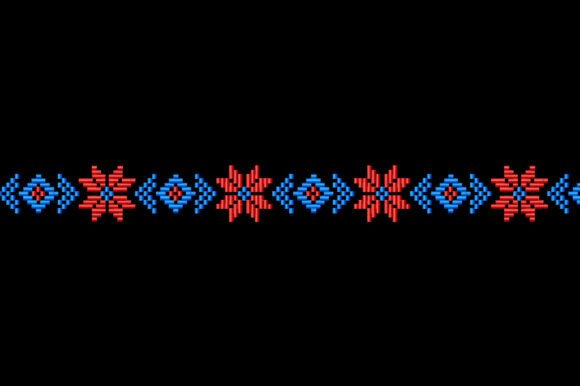
Folk Border Embroidery Pattern
First Impression: Rustic Charm Meets Cultural Depth
The moment I read Folk Border Embroidery Pattern, I felt that quiet spark—the kind that tells me this design belongs on a well-loved apron, a linen tea towel folded neatly at a craft fair booth, or stitched boldly across the front of a market tote. It’s not loud or trendy; it’s rustic, decorative, and quietly premium. The phrase “intricate Folk Cross Stitch Border Pattern, designed thoughtfully with passionate detail” signals intention—not just ornamentation, but cultural resonance. And “untouched beauty of Ukrainian visual culture” adds instant storytelling weight. That matters deeply when buyers pause at your table, drawn less by price and more by meaning.
Where It Shines: Craft Fair-Ready Product Pairings
This border pattern isn’t just versatile—it’s strategic. On tote bag designs, it frames the bottom edge or wraps cleanly around a side pocket, giving structure without overwhelming. As apron embroidery, it anchors the waistband or traces the bib’s curved hem—elegant, functional, and photogenic. For tea towel embroidery, it sings against natural linen or oatmeal cotton: clean lines, rhythmic repetition, and enough visual texture to catch light (and eyes) from three feet away.
It also works beautifully as an embroidered patch—especially when backed with iron-on stabilizer for quick application to denim jackets or canvas pouches. On pillow covers, it lends heirloom warmth along the seam or as a subtle border around a solid-color center. Even on curved surfaces like caps, a shortened segment (say, 4–6 inches) maintains clarity if hooped precisely and stitched with lightweight stabilizer.
What Buyers Notice First—And Why It Converts
At a craft fair, attention spans are short and sensory input is high. Folk Border Embroidery Pattern wins because it reads clearly at a glance: balanced rhythm, intentional spacing, and folk motifs that feel familiar yet distinctive. It doesn’t shout—but it *holds space*. Customers don’t just see stitching; they sense care, heritage, and handmade quality. That perception lifts perceived value instantly, especially on small shop products like fabric pouches or giftable handmade items.
For Etsy sellers, this translates to stronger listings. Paired with a clean printable mockup, the border creates instant brand consistency—whether you’re selling digital embroidery files or finished product. Its repeatable nature means you can offer matching sets (tea towel + apron + pouch), reinforcing your boutique maker identity and encouraging bundle sales.
Production Reality Check: What Works—and What Needs Care
Yes, it’s intricate—but “intricate” doesn’t mean impractical. As a working embroidery designer, I scanned for red flags before committing to batch production. Here’s what stood out:
- Stitch density appears moderate—not so dense it’ll pucker thin fabrics, but rich enough to hold detail on textured towels.
- No tiny lettering or micro-details that vanish at 2.5 inches wide—so it scales reliably from 3" patches to 14" pillow borders.
- The repeating motif suggests strong adaptability: easy to crop, mirror, or adjust length for different hoop sizes.
- It photographs exceptionally well—especially in natural light—making it ideal for commercial embroidery marketing and social media previews.
But caution points remain. On dark fabric, contrast depends entirely on your thread colors; always test with your intended palette. Avoid stretching it too far over curved cap surfaces or compressing it onto narrow straps—clarity fades fast. And on heavily textured towels or thick denim, use cutaway stabilizer and reduce top tension slightly to prevent skipped stitches.
Booth Impact & Brand Strength
In my own weekend booth, I’ve tested dozens of borders. Folk Border Embroidery Pattern consistently draws longer stops—not because it’s flashy, but because it feels *intentional*. When grouped with complementary pieces (a muted linen apron, a cream market bag, a set of embroidered napkins), it builds cohesion. That cohesion = trust. Buyers begin to recognize your aesthetic, remember your name, and return next season.
It also strengthens your story. You’re not just selling embroidery—you’re offering connection to tradition, craftsmanship, and place. That narrative resonates powerfully with conscious shoppers, gift buyers, and interior-minded customers seeking timeless handmade product over mass-produced decor.
Designer Notes You Can’t Skip
Before cutting fabric or uploading to your embroidery machine:
- Run a test on scrap fabric matching your target product—especially if using textured towels or dark canvas.
- Check thread contrast under both daylight and booth lighting; some reds/greens shift dramatically.
- Review spacing between repeats—tight gaps may merge on low-thread-count cotton; widen slightly if needed.
- Confirm your largest hoop size fits the longest version you plan to stitch—no mid-design rehooping.
- Inspect stitch density in tight corners or motif junctions—overcrowding causes puckering or thread breaks.
- Use appropriate stabilizer: tear-away for stable wovens, cutaway for knits or stretchy pouch fabrics.
- Create at least one real-world mockup—a finished tea towel or patch—not just a digital preview.
- Compare how it looks on light vs. dark fabric swatches; adjust thread choices accordingly.
- Verify commercial licensing status before selling finished products—this is non-negotiable for Etsy sellers and wholesale partners.
Final Thought: A Border That Builds Your Business
Folk Border Embroidery Pattern isn’t just another embroidery file. It’s a quiet growth tool. It elevates your craft fair product lineup with minimal effort, deepens your brand voice, and invites repeat engagement—from first-time booth browsers to loyal Etsy customers. In a market crowded with generic florals and overused quotes, this border stands apart: rooted, refined, and ready to sell.
Whether you're launching your first small shop product or expanding your digital embroidery file catalog, treat this design like the asset it is—not just decoration, but a bridge between heritage and hustle.